My faith in humanity was severely shaken on Thursday evening.
You see, my kids were in a bike accident.
But, before you get too worried as you read my words, let me assure you that they are now both completely fine. However, on Thursday night I wasn’t so sure…..
My daughter had a baseball game at a nearby ball diamond, and my husband had another commitment that evening, so the kids and I biked over to enjoy a gorgeous Summer evening outside. After the game, the three of us rode home as a convoy on the sidewalk; me in the front, my five-year-old daughter behind me, and my eight-year-old son bringing up the rear. We were three-quarters of the way home, almost finished our short five-minute ride, when I heard a crash and a scream. I was only a couple of bike lengths ahead, and as I quickly stopped and turned, I saw both kids laying on the ground, bikes twisted, backpacks scattered, both of their mouths open, howling in pain. I ran to them immediately, yanking my folding chair straps off my shoulders, throwing my gear, and scanning the scene as my emotions built and my heart raced.
My daughter was lying at the bottom of the pile, her head turned away from me, crying loudly. As I approached, my son pulled himself off of her and I yanked his bike to the side. His cries, however, were frantic and distraught, and he was writhing and gripping his abdomen. My gut instinct told me that he was more seriously hurt, so I tended to him first. “My ribs, my ribs,” he was screaming, and I knelt on the sidewalk to hold him and try to offer some comfort. I called to my daughter from my crouched position on the ground, and she got up and crawled to me, desperately hanging onto my other shoulder, sobbing.
This entire sequence had taken less than a minute, when a neighbor across the street came to offer his help. “I heard the crash and saw you running,” he said, “is there anything I can do?” By that point, my son was standing, squirming, clutching his stomach, his panicked cries not slowing down. Over the next few seconds, I was able to decipher that the “rib” he was referring to was actually his lower abdomen, and that his bike wheel had turned as he fell, causing him to land belly-first into the blunt end of his handlebar. As my mind raced with right lower quadrant anatomy, the complications of blunt force trauma, and first-aid protocols, I thanked my neighbor, and assured him I could manage. Both kids were still wailing, but we were just around the corner from our house, and my main concern was to get them back home where I could better assess and tend to them.
The neighbor walked away reluctantly, leaving me amidst a 10-metre swath of bikes, lawn chairs, backpacks, and ball gloves. Our things were strewn along the sidewalk and the roadside, and in the middle of it all, I huddled on bare knees, with one kid in each arm, calming them, cuddling them, tears streaming down all of our cheeks.
Two separate cars drove past us, slowly, down our sleepy suburban street, seeing the carnage of the crash. They didn’t stop or offer assistance. Minutes passed and my kids continued to cry. I buried my face in their hair, in their necks, breathing them in, thinking about what should be my next logical step, grateful that the accident hadn’t been worse. When I looked up, two people out for a walk were passing by. They weaved in and out of our mangled bikes, stepped over bags, and continued to walk. They did not look at me. They did not offer to help. They walked right past us.
We got ourselves home, pushing bikes instead of riding them; partly due to pain, partly due to fear, mostly due to bent derailleurs and broken pedals. I phoned my mother-in-law, a retired nurse, to get her opinion as to whether or not a hospital visit was warranted; there was no abdominal rigidity, no vomiting, no blood in his urine, so we decided it wasn’t. I tended to the kids with warm baths and ice packs and tucked them into my bed so that I could keep an eye on them both throughout the night. My husband arrived home later that evening to a shaken wife and an angry rehashing of the accident. My fear and my panic had settled, and had blended together into rage and disbelief about the people that passed us by.
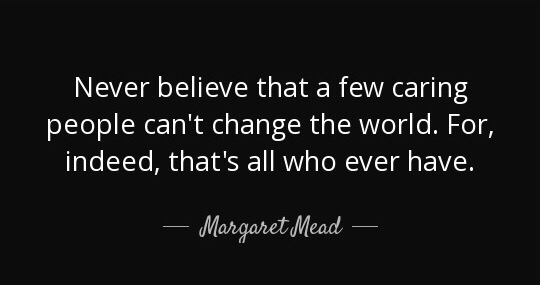
I can only hope that they chose not to stop because they thought I had the situation handled. I can’t let cynicism overtake me, and believe that they chose not to stop simply because they didn’t want to. I believe that people are good, and I believe that bad situations often teach us something. This was no exception. Let’s offer help. Let’s offer kindness. Let’s look out for each other.
Friday morning revealed a scrape on my daughter’s shoulder, an ugly purple circle on my son’s belly, and many recounts about how the accident happened and what we could do differently the next time (i.e. stopping too quickly and following too closely). We talked about the nice man who came from across the street to lend a hand. And we talked about the people who didn’t.
“You must be the change you want to see in the world.” ~Mahatma Gandhi





 drworobec.com