I read a post circulating online last week and I can’t get it out of my head. “The Disease of Being Busy“, written by Omid Safi (@ostadjaan), perfectly, perfectly describes what I’ve been thinking about for months. And since I cannot express myself any more wonderfully than he already has, I thought I’d skip over reinventing the wheel, and pass along his words to you verbatim. This post sums up my philosophy on parenting, on friendship, on living.
This is his essay. Think. Reflect. Enjoy:

~~~
I saw a dear friend a few days ago. I stopped by to ask her how she was doing, how her family was. She looked up, voice lowered, and just whimpered: “I’m so busy… I am so busy… have so much going on.”
Almost immediately after, I ran into another friend and asked him how he was. Again, same tone, same response: “I’m just so busy… got so much to do.”
The tone was exacerbated, tired, even overwhelmed.
And it’s not just adults. When we moved to North Carolina about ten years ago, we were thrilled to be moving to a city with a great school system. We found a diverse neighborhood, filled with families. Everything felt good, felt right.
After we settled in, we went to one of the friendly neighbors, asking if their daughter and our daughter could get together and play. The mother, a really lovely person, reached for her phone and pulled out the calendar function. She scrolled… and scrolled… and scrolled. She finally said: “She has a 45-minute opening two and half weeks from now. The rest of the time it’s gymnastics, piano, and voice lessons. She’s just…. so busy.”
Horribly destructive habits start early, really early.
How did we end up living like this? Why do we do this to ourselves? Why do we do this to our children? When did we forget that we are human beings, not human doings?
Whatever happened to a world in which kids get muddy, get dirty, get messy, and heavens, get bored? Do we have to love our children so much that we overschedule them, making them stressed and busy — just like us?
What happened to a world in which we can sit with the people we love so much and have slow conversations about the state of our heart and soul, conversations that slowly unfold, conversations with pregnant pauses and silences that we are in no rush to fill?
How did we create a world in which we have more and more and more to do with less time for leisure, less time for reflection, less time for community, less time to just… be?
Somewhere we read, “The unexamined life is not worth living… for a human.” How are we supposed to live, to examine, to be, to become, to be fully human when we are so busy?
This disease of being “busy” (and let’s call it what it is, the dis-ease of being busy, when we are never at ease) is spiritually destructive to our health and wellbeing. It saps our ability to be fully present with those we love the most in our families, and keeps us from forming the kind of community that we all so desperately crave.
Since the 1950s, we have had so many new technological innovations that we thought (or were promised) would make our lives easier, faster, simpler. Yet, we have no more “free” or leisurely time today than we did decades ago.
For some of us, the “privileged” ones, the lines between work and home have become blurred. We are on our devices. All. The. Freaking. Time.
Smart phones and laptops mean that there is no division between the office and home. When the kids are in bed, we are back online.
One of my own daily struggles is the avalanche of email. I often refer to it as my jihad against email. I am constantly buried under hundreds and hundreds of emails, and I have absolutely no idea how to make it stop. I’ve tried different techniques: only responding in the evenings, not responding over weekends, asking people to schedule more face-to-face time. They keep on coming, in volumes that are unfathomable: personal emails, business emails, hybrid emails. And people expect a response — right now. I, too, it turns out… am so busy.
The reality looks very different for others. For many, working two jobs in low-paying sectors is the only way to keep the family afloat. Twenty percent of our children are living in poverty, and too many of our parents are working minimum wage jobs just to put a roof over their head and something resembling food on the table. We are so busy.
The old models, including that of a nuclear family with one parent working outside the home (if it ever existed), have passed away for most of us. We now have a majority of families being single families, or where both parents are working outside the home. It is not working.
It doesn’t have to be this way.
In many Muslim cultures, when you want to ask them how they’re doing, you ask: in Arabic, Kayf haal-ik? or, in Persian, Haal-e shomaa chetoreh? How is your haal?
What is this haal that you inquire about? It is the transient state of one’s heart. In reality, we ask, “How is your heart doing at this very moment, at this breath?” When I ask, “How are you?” that is really what I want to know.
I am not asking how many items are on your to-do list, nor asking how many items are in your inbox. I want to know how your heart is doing, at this very moment. Tell me. Tell me your heart is joyous, tell me your heart is aching, tell me your heart is sad, tell me your heart craves a human touch. Examine your own heart, explore your soul, and then tell me something about your heart and your soul.
Tell me you remember you are still a human being, not just a human doing. Tell me you’re more than just a machine, checking off items from your to-do list. Have that conversation, that glance, that touch. Be a healing conversation, one filled with grace and presence.
Put your hand on my arm, look me in the eye, and connect with me for one second. Tell me something about your heart, and awaken my heart. Help me remember that I too am a full and complete human being, a human being who also craves a human touch.
I teach at a university where many students pride themselves on the “study hard, party hard” lifestyle. This might be a reflection of many of our lifestyles and our busy-ness — that even our means of relaxation is itself a reflection of that same world of overstimulation. Our relaxation often takes the form of action-filled (yet mindless) films, or violent and face-paced sports.
I don’t have any magical solutions. All I know is that we are losing the ability to live a truly human life.
We need a different relationship to work, to technology. We know what we want: a meaningful life, a sense of community, a balanced existence. It’s not just about “leaning in” or faster iPhones. We want to be truly human.
W. B. Yeats once wrote:
“It takes more courage to examine the dark corners of your own soul than it does for a soldier to fight on a battlefield.”
How exactly are we supposed to examine the dark corners of our soul when we are so busy? How are we supposed to live the examined life?
I am always a prisoner of hope, but I wonder if we are willing to have the structural conversation necessary about how to do that, how to live like that. Somehow we need a different model of organizing our lives, our societies, our families, our communities.
I want my kids to be dirty, messy, even bored — learning to become human. I want us to have a kind of existence where we can pause, look each other in the eye, touch one another, and inquire together: Here is how my heart is doing? I am taking the time to reflect on my own existence; I am in touch enough with my own heart and soul to know how I fare, and I know how to express the state of my heart.
How is the state of your heart today?
Let us insist on a type of human-to-human connection where when one of us responds by saying, “I am just so busy,” we can follow up by saying, “I know, love. We all are. But I want to know how your heart is doing.”
~~~
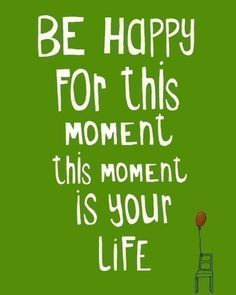
Let me go on record to say that I will chose trips to the playground, afternoons playing Lego, meandering nature walks, early-morning runs, and catching up with friends over chronic, over-scheduled chaos. Every. Single. Time.

 In fact, I came across an old competitive running journal of mine, which I wrote in my early 20s, and that’s what prompted this post. Aside from writing down my daily mileage (which, at the time, was upwards of an obsessive I-must-run 100kms/week) I also recorded how “fat” I felt. I was 135lbs, wore a size 6, and most of my journal entries centered around varying degrees of “feeling fat”. Because skinny runners run faster, right? Skinny girls are pretty, right? Skinny is perfect, right?

 drworobec.com