“and your back pain is going to go away”

“You know what really helped me?” a patient recently said during her second treatment with me.  “The fact that you told me that my back wasn’t going to go out.

I hear this type of thing often.  This particular patient was suffering with lower back pain, and had a previous history of an exceptionally debilitating episode that made her temporarily unable to care for her two young children.  Her fear level was high.  On her first visit to the clinic, I spent much of our time together talking with her, explaining what was happening to her back, and why she was having pain.  Patient education is patient empowerment.  I did some hands-on manual therapy and then we chatted about rehabilitation exercises and the importance of movement, something that people in pain tend to avoid.  The last words I said to her before she left were along the lines of “don’t worry, you’re going to be fine, and your back pain is going to go away.”  A huge part of my job is patient education, because knowledge is power.

And just so that we’re all on the same page moving forward, backs don’t “go out” and then “go back in,” running does not cause arthritis in your knees, and getting adjusted three times a week for the rest of your life will not prevent stage three spinal degeneration.  Yet these are all proclamations that patients come in and tell me about themselves; these blanket statements are untrue and damaging, and in most cases, patients have been told these things by a health professional.  As chiropractors, and certainly as all healthcare providers, we cannot underestimate the power of our words for the good and for the bad.  If you have a patient’s trust and respect, you have the power to remarkably alter the course of their healing and the perception of their body’s abilities through your words alone.

This is the same reason that medical imaging can often be detrimental; because it affects a patient’s psyche.  Did you know that in many cases, there is actually a very poor correlation between what is shown on a medical image (an X-ray, for example) and a patient’s symptomatology?  But if a patient is shown an x-ray of “degenerative joint disease” (that’s a fancy term for arthritis) in their spine, they will come to believe that they have an arthritic, incapable, dysfunctional body.  This person then tends to become fearful of movement and therefore moves less.  And what creates a perfect storm for unhealthy joints?  Lack of movement.  Herein lies the problem.

Healthcare professionals: please do be careful with your words, and patients: please do be careful of what you listen to.

sticker375x360-u3


I Hurt My Back

I hurt my back last Thursday.

I have never had a back injury.  Like, never.  I’ve hurt my neck, broken my thumb, sprained my ankles, and torn my ACL, but my back has never given me problems.  As a chiropractor, perhaps this is to be expected, but in fact, the opposite is true.  Many of my colleagues decided to join this profession after having great success with chiropractic for their own back injuries, and many others now suffer with lower back pain as a result of the physical nature of what we do.  But for me, despite two babies, 225lb deadlifts, and a clumsy fall-down-often nature, my lower back had been spared.  Until Thursday.

Thursdays are my GSD day (Get Sh** Done).  I don’t have clinic hours that day, so my day often begins at the gym and ends at the grocery store, doing computer work, or cleaning my house.  This past Thursday, I was with my 9am crew working on back squats.  It was a 12-minute working segment; one back squat per minute for 12 minutes, with progressively increasing weight.  On minute six, I lost my focus.  I didn’t concentrate on my core, or my breath, and I heard a “click” from my back on the way down to the bottom of my squat.  I didn’t have pain immediately, but it’s not my first rodeo, and I knew exactly what I’d done.  I let my competitive ego take over, finished the workout, and then called the clinic.

I was in a treatment room less than two hours after that dreaded “click” and by then, I couldn’t even stand up straight.  But Dr. Dave worked his magic, and when I left thirty minutes later I was feeling almost 100%.  Through the weekend, my back pain came and went, but with some heat, core stability exercises, hot yoga, and a great Sunday long run, I am back to full function and pain free today.  Five days from start to finish; from hunched and bent forward in pain to a full deadlift workout at 6am this morning.  Chiropractic works.  That treatment set me up on a path of quick healing.

I’ve written about low back pain before, but this is the first time I had been on the other side of the coin.  This experience has grown my empathy and expanded my amazement with the wonders of my “job.”  It comes down to mechanics, and if we can fix your mechanics, we can get you out of pain and functioning optimally.  Quickly.

take-care-of-your-body-300x214


A Place Called Vertigo

There seems to be a vertigo epidemic in my practice as of late.  I’ve had three people in the past month walk through our doors, looking for some relief from their symptoms of vertigo; far and above the four to five cases I typically treat annually.

Vertigo is defined as:

“the sensation of spinning while stationary.”

A specific type of dizziness, vertigo can be unrelenting and difficult to live with, as its sufferers will attest.  But it’s actually quite a common condition, and up to 10% of the population will experience vertigo at some point in their lives.

Can I help?

In short, YES.

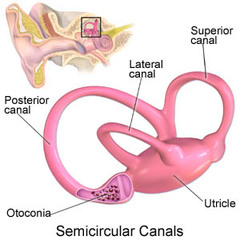
A simple procedure, called the Epley maneuver, is very effective for vertigo when an inner ear component is involved.  You see, our inner ear contains the semi-circular canal, which is a key element in our system of balance.  Tiny calcium carbonate crystals are present within our semicircular canal, and their location allows our body to figure out our head position in space.  If the crystals, called otoconia, are disturbed and get into the wrong spot, our equilibrium gets thrown off, and the end result can be vertigo.


lzlkk0xbrh0nnp7y1elzoa_m


The Epley maneuver is painless, takes less than five minutes, and is very effective.  And while I don’t have a double-blind controlled research trial to present to you, I would estimate my success rate with this maneuver to be well upwards of 90%.

Oh, the things you learn on a Tuesday…..