“When Should I get Treatment?”

“When should I get treatment?”

I get asked this question a lot, most often by people who are nursing an injury, hoping that I’ll tell them to just wait it out.  And the truth is, for most injuries, waiting it out will ease your symptoms.  Nature will take its course, your body will know what to do, and your pain will subside.  But is that really the best option?

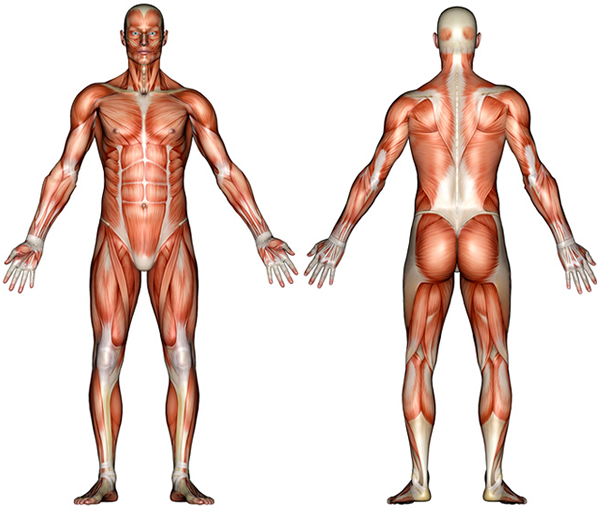
blank-muscle-anatomyYou see, our bodies are very, very smart.  They know what to do to fix things, far better than I claim to know.  But the thing is, our bodies don’t take compensation injuries into account.  A rob-Peter-to-pay-Paul situation often develops.  And let’s not forget the time factor; manual therapy can speed up healing rates.

Take the common example of knee pain.  Your knee hurts.  So you take some time off from the gym, modify your daily activities, and utilize home remedies like stretching and Voltarin and hot tubs and ice.  You feel better, so you return to the gym and the physical rigors of daily life.  But your knee pain starts to creep back in, although milder than before, and now it’s accompanied by lower back pain.  Why?  Well, the cause of your knee pain was never really addressed with all of your stretching and Voltarin-ing and hot tubbing and icing, so when you resume activity, it comes back.  And your body has done such a excellent job of compensating (gait changes, postural changes, biomechanical changes) that your lower back worked extra hard and is now paying the price via a secondary injury.  And you forgot to maintain your core strength while you did all that laying around nursing your knee pain.  Sigh.

“When should I get treatment?”

You should get treatment if home remedies aren’t working effectively.

You should get treatment if you want to get back in the game faster.

You should get treatment if you want to be proactive and preventative with your health.

“When should I get treatment?”

Now.

BSAS Logo-2


Oh Boy, I Hate That

It was the annual CrossFit Games a couple of weeks ago.  Kind of like the “Olympics of CrossFit,” this annual competition is held in California every year, and hosts the best CrossFitters from around the world to determine the title of “Fittest on Earth” through several days of grueling events. For the average CrossFitter like myself, it’s a chance to marvel at the athleticism involved; competitors performing movements that we do day in and day out at the gym, but doing it far faster and far heavier than we can ever hope to do.  But we hope anyways.  And we cheer.  And we dream.

CrossFit has a big presence on Social Media, so there’s lots of public opinion on display.  And I’ve been shocked and saddened at some of the comments about the appearance of the female competitors.  “Too muscular,” “too manly,” “not feminine.”  Predictably, I did not come across one negative comment about the bodies of the male athletes.  Oh boy, I hate that.

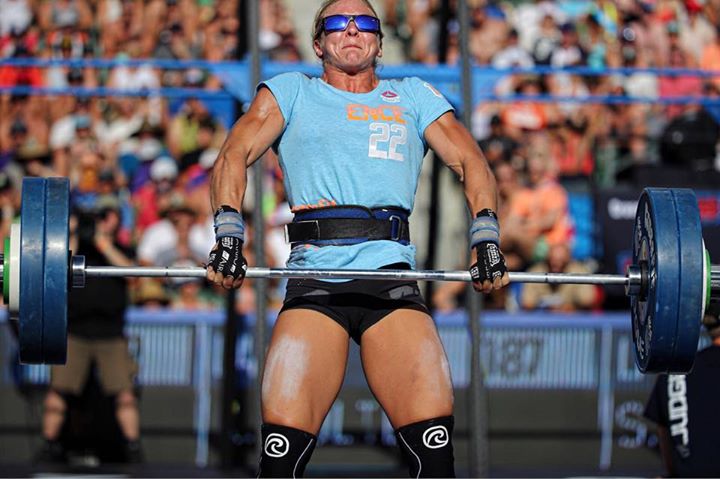
Brooke Ence, a 25-year-old rookie CrossFit Games competitor, won the one-rep-max clean and jerk event.  She cleaned a 242lb barbell up to her shoulders and jerked it over her head.  242 pounds.  My max deadlift is 226 lbs and I have been doing CrossFit for more than five years- and she took 242lbs and put it over her head.  This is a display of athletic power that few people can ever hope to achieve.  It was also a 12-pound personal best for her; a testament to her training and the influence of an energetic stadium crowd.

brooke ence

I think she looks like Barbie.  But not a Barbie that is so disproportionate that she would tip over if she were a real person- rather, a Barbie that has worked hard to make herself into an incredible athlete and reach her goals doing something she loves.  Yes, she has more muscle than the average woman.  And it’s that muscle that allows her to do these amazing things.  She has trained for years for that muscle and I wish that the naysayers would look at it from another side.  I’m looking at it from the eating disorder side.

It’s no secret that I’ve battled eating disorders and body image issues throughout much of my life.  I’ve also been successfully fighting this battle since I began CrossFit in 2010.  I no longer view my body as a series of measurements and numbers on a scale- I view it as capacity in the gym and in my life.  I look at how fast I can run, how much I can lift, how high I can jump.  I look at how my fitness transfers into living a healthier life.

I strive to be strong instead of striving be skinny.  This is a big shift for me.  Imagine if we could make this shift happen for the thousands upon thousands of teenage girls and adult women watching the CrossFit Games.  Could we change the world?  Well, we could change their worlds.


You Have the Rest of your Life to Live

I have had this poster plastered to the side of my filing cabinet in my home office for a very long time:

101 Ways to Cope With Stress-1

It was given to me by a teacher in high school, in the midst of my grade 12 year, when the pressure of University-entrance GPAs was at an all-time high.  I think that teacher could see then what I couldn’t; that everything comes down to one step at a time.  I’ve never been great at seeing the forest for the trees, and my emotions overwhelm me regularly.  When I was a teen, I was still figuring out how to deal with this part of myself.  As an adult, I’ve tried to embrace the passion in my personality and harness my energy effectively.  I now call it ambition (if you talk to my husband, he may chose a different word to label  this trait of mine).

IMG_2034I’m currently in the midst of a stressful time in life; we’re moving to a different neighborhood and there’s all of the logistics and ups-and-downs that comes with that transition.  As I was doing some paperwork last night, I glanced to this poster and the phrase that stood out was “look at challenges differently.”  I see a different phrase every time I look, but “look at challenges differently” seemed perfectly timed for my current situation.  Good advice, great coincidence, perfect reassurance.

This poster has been hung on my University dorm room wall, shipped to Toronto in my move-across-the-country trunk, tacked above my desk as I prepped for my chiropractic licensing exams, and now taped to my filing cabinet and moved to three different houses.  It’s approaching 20 years old, is dog-eared and sun-faded, and it’s one of my most prized possessions.

It reminds me of where I’ve been.  It gives me clarity of where I’m at.  It gives me hope for where I’m going.

My favorite part is the last line: “you have the rest of your life to live.”